
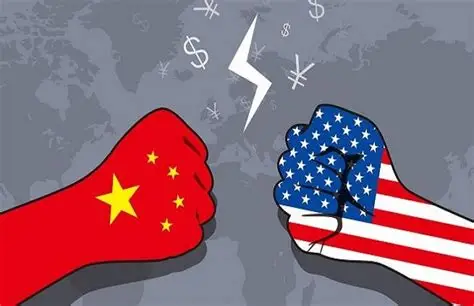
The Global Economy and the Impact of the Recent U.S.–China Agreement

Executive Summary
Any easing of tensions between the world’s two largest economies reduces risk premiums and softens trade and technology barriers, supporting global growth while slightly curbing inflation through smoother supply chains. The positive effects appear quickly in market sentiment but more slowly in real economic indicators. Geopolitical and regulatory constraints—especially in advanced technology—still prevent a full return to frictionless globalization.
1) Main Channels of Impact
A) Inflation and Supply Chains
-
Lower tariffs and trade barriers (if included in the deal) reduce input costs and strengthen competition, slightly lowering prices over the next 6–12 months.
-
Improved shipping and logistics flow shortens delivery times and decreases shipping cost volatility, particularly benefiting durable goods, electronics, and machinery.
B) Global Trade and Growth
-
Reduced restrictions increase supply chain flexibility in Asia and improve capacity utilization, supporting global trade growth modestly above baseline.
-
Open economies positioned at supply chain intersections (ASEAN, Korea, Taiwan, Mexico) are likely the main beneficiaries.
C) Financial Markets
-
Equities: Improved risk appetite favors cyclical industries (manufacturing, basic materials, capital goods) and consumer technology.
-
Bonds: Lower recession and “supply shock” fears may raise government bond yields slightly, with flatter yield curves if inflation cools.
-
Currencies: Reduced risk aversion boosts emerging-market and commodity currencies, while the dollar may remain firm versus the yuan due to yield differentials.
D) Technology and Structural Limits
-
Even with an agreement, controls on sensitive technologies (advanced semiconductors, lithography tools, AI systems) will likely persist—keeping a partial split in high-tech supply chains and limiting overall gains.
2) Winners and Losers by Sector
Winners:
-
General manufacturing and machinery: Gains from tariff relief and stronger investment demand.
-
Consumer electronics and components: More resilient supply chains and lower costs.
-
Shipping and logistics: Higher volumes and reduced volatility.
-
Agricultural commodities: If the deal includes purchase commitments or market access, volumes and prices will rise.
Cautious/Mixed:
-
Advanced semiconductors: Still under export restrictions and security scrutiny.
-
Energy: Indirect effect; stronger industrial demand supports consumption, but prices depend on OPEC+ supply and geopolitics.
3) Macro Effects by Time Horizon
Short Term (0–3 months):
-
Improvement in business confidence and Purchasing Managers’ Index (PMI) data.
-
Decline in risk premiums on equities and corporate credit.
-
Slight drop in shipping costs and volatility.
Medium Term (3–12 months):
-
Noticeable impact on goods inflation (fractions of a percentage point).
-
Trade growth acceleration, particularly in Asia and electronics supply chains.
-
Selective investments in localization and diversification rather than full de-globalization (a “re-routing,” not a reversal).
Long Term (1–3 years):
-
If dispute-resolution mechanisms are effective and the deal expands, global GDP growth could see a small but sustainable boost through investment and productivity gains.
-
If AI and chip export limits persist, two parallel tech ecosystems will continue to exist, capping integration.
4) Risks and Constraints
-
Political backlash: A change in U.S. administration or congressional stance could re-escalate tariffs.
-
Security issues: Tensions over sensitive technologies or geopolitical hotspots may overshadow the economic framework.
-
Implementation delays: Slow or unclear tariff rollbacks reduce policy certainty.
-
Domestic slowdowns: Weak U.S. or Chinese demand would limit global gains even with a trade accord.
5) Implications for Policymakers and Investors
-
Industrial and exporting firms: Reassess supplier networks, freight contracts, and inventory strategies to capture cost savings.
-
Investors: Overweight high-quality cyclical sectors and Asian economies tied to electronics, while hedging policy risk.
-
Commodity-producing economies (including the Gulf): Benefit from stronger global industrial demand but must manage oil price and dollar volatility.
-
Technology sector: Focus on less-regulated tech layers (software, mid-range components) and maintain robust export compliance.
6) Two Likely Scenarios
Optimistic Scenario (moderate probability):
Gradual tariff reductions and expanded market access in selected goods, plus new technical dialogue channels. Outcome: global trade growth 0.3–0.5 percentage points above baseline by 2026, and a modest decline in global goods inflation.
Cautious Scenario (reasonable probability):
A largely political truce that softens rhetoric but leaves key tariffs and tech restrictions in place. Outcome: improved sentiment and short-term market gains, with limited real economic impact.
Conclusion
Any de-escalation between the United States and China is a tailwind for the global economy. Yet the real impact depends on implementation details—how many tariffs are lifted, how technology controls evolve, and whether a stable dispute-resolution framework exists. Until then, the world can expect a fast boost in sentiment and markets, followed by gradual improvement in trade and inflation, constrained by ongoing technological and geopolitical divides.