
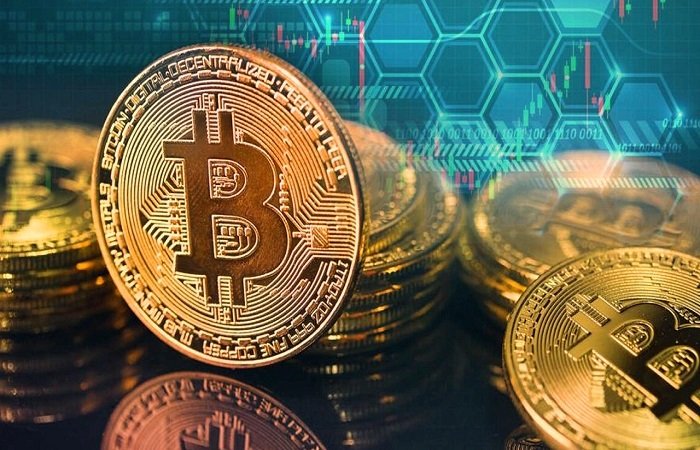
The Impact of the Cryptocurrency Market on the World: Between Financial Revolution and Economic Risks

Introduction
Over the past decade, cryptocurrencies have become one of the most controversial and transformative phenomena in global economics.
What began with Bitcoin in 2009 as an experiment to bypass traditional banking systems has evolved into a global market worth trillions of dollars.
This rapid transformation has allowed digital currencies to reshape the global economy, monetary policies, investment strategies, and even the very concept of money itself.
1. A Digital Revolution in the World of Finance
Cryptocurrencies have launched a revolution in the global financial system by:
-
Eliminating financial intermediaries, enabling peer-to-peer transactions without banks.
-
Reducing transaction costs and speeding up international payments.
-
Expanding financial inclusion, especially for millions in developing countries who lack access to traditional banking.
Moreover, Blockchain technology, the backbone of cryptocurrencies, has brought transparency and trust to financial systems — every transaction is recorded on a decentralized network that is extremely difficult to manipulate.
2. The Impact on Banking Systems
Traditional banks now face an increasing challenge from the rise of digital currencies.
Many financial institutions have started developing their own Central Bank Digital Currencies (CBDCs) — such as the Digital Yuan in China and the Digital Euro in Europe — to maintain control over monetary systems.
At the same time, some banks have begun integrating cryptocurrency trading and custody services to meet growing customer demand and stay competitive in the evolving digital economy.
3. Investment and Speculation
Cryptocurrencies have emerged as a new investment class, attracting individuals and institutional investors alike.
However, their high volatility has made them a playground for speculation and risk.
Bitcoin, for example, has seen sharp rallies followed by dramatic crashes — prompting debate over its suitability as a stable long-term asset.
Still, many economists view these fluctuations as a natural phase in the maturation of a young and fast-growing market.
4. Influence on the Global Economy
The effects of cryptocurrencies extend beyond investors to national and international economies, through:
-
Challenging monetary policy, since decentralized currencies operate outside the control of central banks.
-
Increasing cross-border capital flows that are often difficult to regulate.
-
Creating new economic opportunities in fintech, cybersecurity, and blockchain development sectors.
While some governments fear losing control over money supply, others view digital assets as a chance to promote financial inclusion and attract technology investment.
5. Challenges and Risks
Despite their promise, cryptocurrencies come with significant economic and regulatory risks, including:
-
Extreme price volatility.
-
Use in illegal activities such as money laundering and fraud.
-
Cyberattacks and theft from exchanges or digital wallets.
-
Lack of unified global regulation to govern transactions and protect investors.
These factors contribute to varying levels of public and institutional trust across different countries.
6. The Future of Digital Currencies
The world is moving toward a new era of integration between traditional and digital financial systems.
In the coming years, we can expect:
-
Wider adoption of Central Bank Digital Currencies (CBDCs) as official payment tools.
-
Hybrid payment systems combining the security of traditional banking with the speed and transparency of blockchain.
-
Expansion of global companies accepting cryptocurrencies as official means of payment — especially in e-commerce, technology, and travel sectors.
The ultimate goal will be to achieve a balanced coexistence between innovation and consumer protection.
Conclusion
Cryptocurrencies have become more than just speculative investments; they are a catalyst for transforming the global financial landscape.
They hold immense potential to improve financial efficiency and inclusion, yet they also pose complex challenges in regulation, stability, and trust.
The future is unlikely to be a battle between traditional and digital money, but rather a stage of smart integration between the two, paving the way toward a more transparent, innovative, and equitable financial system worldwide.